
October 19, 2026
Location, location, location — but in Mexico, location means the route people already take
For location-based entertainment companies entering Mexico, a proven concept needs a site people can reach, a space that meets its technical requirements and a capable local operator. Evaluating mobility, foot traffic, deal economics and reasons to return helps determine whether the first venue can become a repeatable business model.
By Pedro Quinzaños, Founder, Grupo Aro
A great experience in the wrong place is a slow way to lose money. I've seen strong concepts struggle in Mexico for reasons that had nothing to do with the creative idea, and almost everything to do with the address.
International location-based entertainment companies usually arrive with impressive material: videos, attendance figures from other cities, a polished pitch. Those open conversations. They don't tell you where in Mexico people will actually show up.
Site selection in Mexico: think about how people move
The single biggest mistake I see is choosing a site with a foreign idea of mobility.
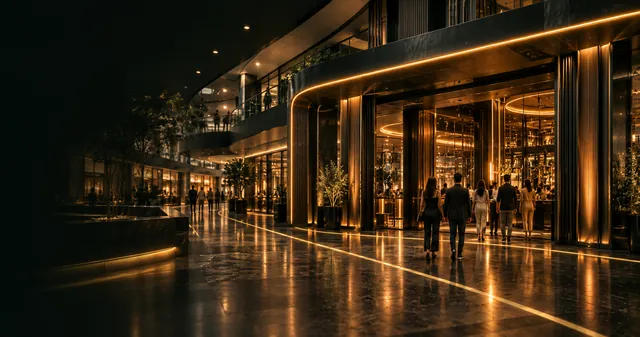
In many markets, operators assume visitors will drive to a destination if the experience is good enough. In Mexico, a much smaller share of people rely on a car of their own. People tend to visit what is on their route: close to public transport, close to work, or inside shopping centers and public spaces where crowds already gather. Weekends concentrate the family and leisure traffic; weekdays depend on what sits near offices and transit.
That changes the site decision completely. A beautiful standalone building that requires a dedicated trip can underperform a less glamorous space inside a well-placed shopping center with steady foot traffic. A bad opening — the right concept in the wrong location — can sink a project that would have thrived two kilometers away.
This is one of the areas where local relationships matter most. We work closely with most of the major groups that own and operate shopping centers in Mexico, and choosing the right site, in the right development, with the right terms, is often the most valuable decision in the whole project.
Then the building has to work
Once the location makes sense, the physical requirements come next. How much clear height does the installation need? What about power, access, loading, fire safety and acoustics? Is the space visible to the right audience? A site that looks impressive in a presentation can be difficult or expensive to operate.
The deal structure should follow the economics, not a template from another country. Mexican construction costs, rent, staffing, taxes and realistic ticket prices all shape whether a revenue share, a lease, a license or a joint venture makes sense. Having sat on the operator's side of these deals, I can say the structure that looks best for the concept owner on paper is rarely the one that holds up once the venue is open and the monthly numbers come in.
The operator: a bad one will sink a good experience
The second lesson is simpler and just as hard: if the operator isn't right, the experience won't work.
The company that created the concept isn't always the right one to run it day to day in Mexico. Someone has to manage ticketing, maintenance, customer service, school groups, birthday parties, local marketing and the occasional emergency — with consistency, week after week. Visitors don't separate the experience from the way they were treated at the door.
Choosing that operator, and agreeing clearly on responsibilities and service levels from the start, deserves as much attention as choosing the content.
I say this from the operator's side, not only as an adviser. We operate our own entertainment venues in Mexico, and that's where these lessons come from: maintenance that can't wait until Monday, staffing that has to match weekend peaks, pricing that has to work at the ticket counter and not just in the spreadsheet. It's why we look at the operating plan as closely as the creative one.
Give people a reason to come back
Finally: why would someone return? Novelty fills the first weekends. Content refreshes, seasonal programming, group formats, school visits and social competition are what turn a one-time visit into a habit and a location into a destination.
A first location should do more than open. It should prove a model that can be repeated in the next city.
Opening a location-based experience in Mexico
If you have a proven location-based experience and you're weighing a first site in Mexico, tell us the footprint, the audience and the numbers it runs on today. We'll tell you which locations and developments make sense, who could operate it, and how the first deal could be structured so it still works a year after opening.
Related: The barriers to entering Mexico and Latin America, and how to get past them · In Mexico, a family outing isn't entertainment. It's a memory.