
October 19, 2026
In Mexico, a family outing isn't entertainment. It's a memory.
For family entertainment companies entering Mexico, the opportunity lies in experiences that families can share and want to revisit. Evaluating spending per family visit, venue fit and demand from birthdays, school groups and seasonal programming helps determine whether a concept proven abroad can support a viable local business.
By Pedro Quinzaños, Founder, Grupo Aro
Of all the categories we work in, this is the one I enjoy most. Partly because the opportunity is strong. Mostly because of what it's built on.
Family sits at the center of life in Mexico in a way that visitors notice quickly. And parents here are used to investing in their children — in their education, their celebrations, and in experiences they can share with them. When the choice is between saving a little and giving the family a day worth remembering, many Mexican parents will stretch for the day.
That changes how an international family entertainment concept should think about this market.
You're not selling a ticket. You're selling a memory.
A family doesn't buy interactive technology, or an hour of activity. It buys an afternoon that feels worthwhile — and, at its best, a moment that gets retold at dinner for years.
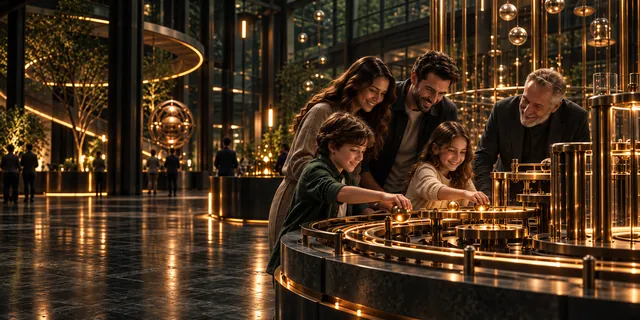
The concepts that work here understand that. They're designed for the moment the family shares, not just for the child at the center of it. Is there something for the parents to do besides watch? Can grandparents join in? Is there a point in the visit that people will want to photograph, talk about, come back to? Does the family leave with something — a picture, a souvenir, a story?
A concept that keeps children busy will do fine. A concept that brings the family together will be recommended.
Family entertainment in Mexico starts with the occasion
Families arrive for different reasons: a birthday, a school vacation, a weekend plan, the hope that the kids will learn something without noticing. Each occasion has its own expectations about price, duration, group size and location.
Birthdays and celebrations deserve particular attention. Here they're often bigger, more social and more planned than international operators expect. A format that can host a group — and make the person being celebrated feel special — has a business line that many foreign concepts never design for.
This is also why it's risky to treat educational products, toys and physical attractions as one market. They overlap in the family's life, but they don't share an operating model. A digital learning product and a ticketed venue face different buyers and different economics.
The business model: group spend, recurrence and repeat visits
The willingness to spend is real. It isn't unlimited, and it isn't a reason to skip the numbers. What is the right price for a family group, not just an individual? How many people can participate each hour? How many staff does it take? How often does the content need to change for families to come back next season?
Start with the unit of sale. A family rarely arrives as one ticket; it arrives as four, five or six — parents, children, sometimes grandparents or cousins. The useful number isn't the price of an entry but the spend per family visit, including food, photos, merchandise and add-ons. Concepts that design for the whole group, with something for each generation to buy and do, tend to see that number grow without raising the headline price.
Then look at what brings families back, because that's where the model is won. Three lines usually carry it. Birthdays, which bring a planned group, a predictable spend and new families who discover the concept as guests. Schools, which fill weekday hours that would otherwise sit empty and introduce the concept to children who then ask to return with their parents. And seasonal content — school vacations, holidays, new programs — which gives families a reason for the next visit. Memberships or annual passes can work as well, but only when the content changes often enough to justify them.
A crowded opening weekend won't compensate for weak repeat demand. In a market where families talk to each other, the second visit — and the recommendation that follows — is where the business is.
The venue matters too. A shopping center may value weekday family traffic. A museum may care about educational relevance. A mixed-use development may want a distinctive anchor. The same concept can be perfect for one and wrong for another.
Keep what made it work
Good market entry doesn't mean changing everything that made a concept successful abroad. It means identifying what must stay intact, and designing everything around it for how Mexican families actually spend time together.
Bringing a family entertainment concept to Mexico
If you have a proven family entertainment concept, tell us what a typical family spends where it already operates and what brings them back. We'll help you test whether those economics hold in Mexico, find the venues where they would, and build the birthday, school and seasonal lines from day one.
Related: The barriers to entering Mexico and Latin America, and how to get past them · Location, location, location — but in Mexico, location means the route people already take