
October 16, 2026
Mexicans will want your sports technology. Whether they keep using it is up to you.
For sports technology companies entering Mexico, the opportunity extends beyond professional teams to golf facilities, racket clubs and entertainment venues. Turning initial curiosity into repeat visits calls for guided onboarding, a clear reason to return and a local business case built around pricing, usage, staffing and revenue per square meter.
By Pedro Quinzaños, Founder, Grupo Aro
Here is a paradox that anyone bringing sports technology to Mexico should understand before the first installation.
On one hand, sport runs deep here, and novelty sells. When something new arrives from abroad — a simulator, a smart court, a connected training system — people want to try it, and the fact that it comes from somewhere else is often part of the appeal. You won't need to manufacture curiosity.
On the other hand, a first experience with new technology works best here when it's guided. Many people would rather be shown than read instructions, and they expect someone to walk them through it the first time. An app download, an account setup or a confusing first session can turn that initial excitement into quiet resistance.
So the challenge in Mexico usually isn't creating desire. It's turning first-time curiosity into a habit.
Sports tech in Mexico: your buyer may be the venue, not the team
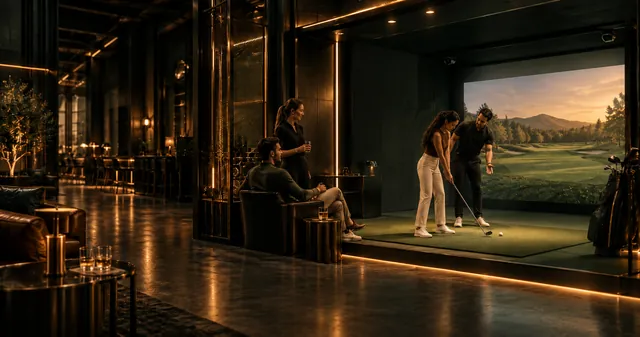
Most sports-tech conversations start with elite performance: professional teams, analytics, high-end training. Those markets exist. But some of the most interesting buyers here are venues — golf facilities, racket clubs, entertainment-oriented sports centers, mixed-use developments where sport is part of a social outing.
A venue owner doesn't evaluate your product on technical specifications. They ask practical questions. Will a first-time visitor understand it in two minutes? Does it give people a reason to book again, stay longer, bring friends? Can my staff run it without a specialist on site? Will the extra revenue justify the space and the investment — and will it still matter in two years, or is it a fad?
If your answers are convincing, the conversation moves quickly. If they're vague, the novelty that opened the door won't keep it open.
Design the first ten minutes
This is where that preference for a guided first experience matters most. The onboarding has to be designed for someone who has never used anything like it, and who won't read a manual.
That often means curation as much as technology. A staff member who welcomes new players and gets them started. A first experience that's simple and rewarding before it's sophisticated. Registration and data capture that happen naturally rather than as a barrier at the door. Follow-up through channels people actually use, so the second visit is invited, not left to chance.
And once people get it, they really get it. The same visitor who hesitated on day one becomes a regular who brings friends and competes for a place on the leaderboard. Getting from one to the other is the job.
Make the technology part of the story
There's a final piece international companies tend to underplay: communication. The technology itself can be a reason to visit — but only if the venue knows how to present it. How it's marketed, what the venue calls the experience, how results and moments are shared: these turn a piece of equipment into something people talk about.
That's also where the local economics come together. A successful installation abroad is a good reference. The Mexican business case — price point, usage, staffing, revenue per square meter — still needs to be built from the ground up, site by site.
Launching sports technology in Mexico
If your sports technology has a proven commercial model abroad, tell us what a regular user looks like where it already works — how often they come back, and what brings them. We'll help you find the Mexican venues where that habit can be built, and design the first ten minutes so it actually is.
Related: The barriers to entering Mexico and Latin America, and how to get past them · Location, location, location — but in Mexico, location means the route people already take